

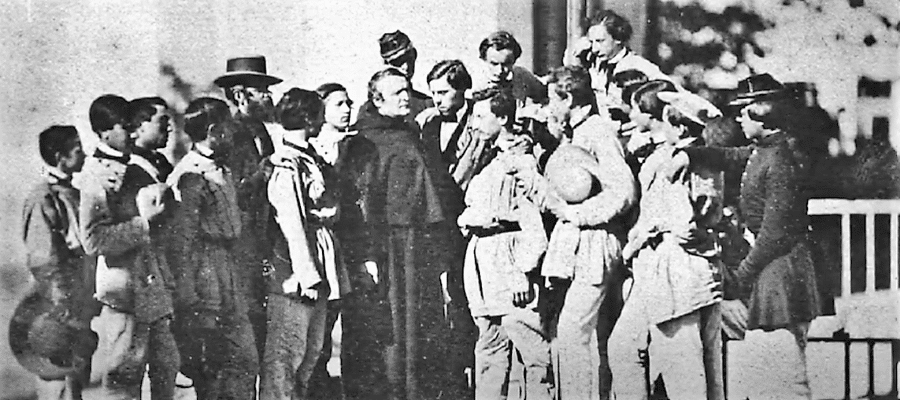
Born in the 19th century -1845…
The 19th century saw a proliferation of new male and female congregations, and it was at the heart of this century, in 1845, that Emmanuel d’Alzon founded the Augustinians of the Assumption, still known as Assumptionists. This strong-willed man wanted a “modern congregation” to renew the Catholic spirit in society.
D’Alzon was deeply affected by the divisions in the world, and became an advocate of unity and reconciliation. Along with his first religious, he devoted himself to education, founding a college in Nîmes named after the Assumption. He wanted young people to transform society both throughsocial commitment to the poorest and by spreading the Good News. But Emmanuel d’Alzon was also concerned with convincing people of Catholic truth, and very early on he turned his attention to the East, where Pope Pius IX asked him to send religious to work in the Ottoman Empire: Bulgaria and Turkey. Another pillar of his apostolate was the creation of “Bonne Presse”, today’s Bayard. A work to promote the Christian spirit and contribute to the formation of the men and women of our time.

Development of the congregation after the foundation period -1880…
The congregation expanded especially after the death of Fr. d’Alzon (November 21, 1880). At the time of his death, there were only 68 religious and 11 novices. The alumnates, small seminaries for young people from modest or poor families, were to provide the bulk of the troops until the congregation reached a peak of almost 2,000 religious in the mid-twentieth century.
-

Bulgaria -

Turkey -
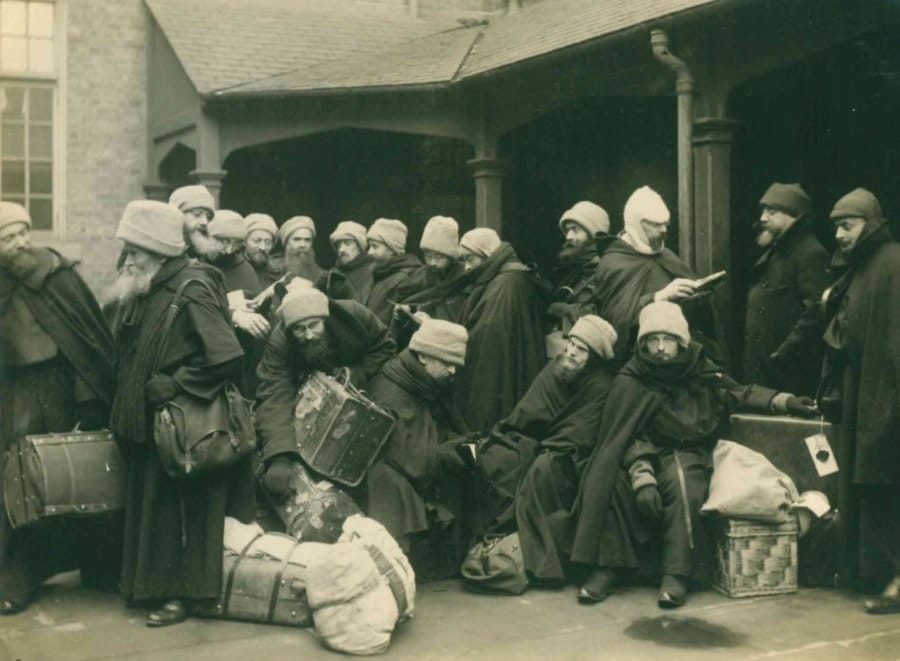
A group of Assumptionists in transit in London 1906 (Arch. Rome). -

Pilgrimage to the Holy Land. -
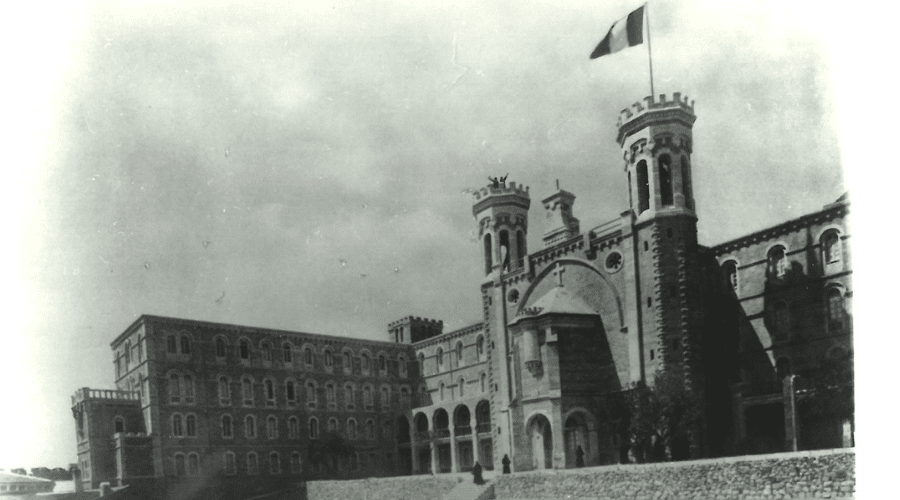
Jerusalem (Notre Dame de France). -

Plovdiv, Bulgaria 1952.
Exile and international development -1900…
The 3rd Republic in France was particularly anti-clerical, with the first expulsion of religious from their communities in 1880 and, above all, the dissolution of the Congregation in France in 1900, followed by the systematic expulsion of Assumptionists from France. The congregation was particularly targeted because of its Press organ, which had a major impact on French Catholic opinion.
On the other hand, this persecution helped the Assumptionists, like other French congregations, to expand internationally from the 19th century onwards. Whether in Europe, South America or North America…
Return to France and recognition of the congregation -1918…
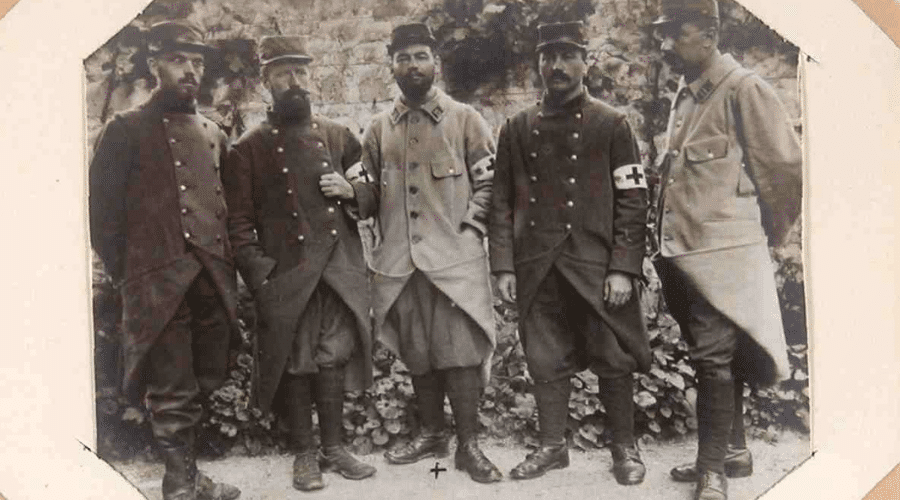
Under Fr. Emmanuel Bailly (from the beginning of the 20th century to the end of the First World War), there was the double ordeal of dispersion and war, with the dismantling of the presence in Turkey and Bulgaria (where up to 150 religious and 200 Oblate Sisters of the Assumption were working before the war) and, of course, the lot of young religious who died on the battlefields and property ransacked or despoiled in several countries.
One positive aspect for the Assumption was the return of the congregation to France. Indeed, the religious, who had fulfilled their military duty, would be allowed – despite real controversy – to remain in France all the same. In fact, they were merely tolerated. For various reasons, the congregation was not officially recognized by the French state until 2013, 168 years after its foundation!

Years of expansion and missionary adventure -1930…
The years between the end of the First World War and the Second Vatican Council were years of expansion and missionary adventure (with, of course, the parenthesis of the Second World War): partial revival of the presence in the Oriental Mission; foundation in the 30s and 50s in Congo-Belgium, North Africa, China and Madagascar, West Africa….
But it was also a time of persecution in the Soviet bloc countries… Several of them were deported to forced labor camps and 3 of them, recognized as martyrs for the faith, were sentenced to death in 1952 in Bulgaria.
It was also a time when Augustinian and Byzantine studies were flourishing, with specialized libraries, scholarly journals and Assumptionist researchers who would become leading figures in the field of Augustine and the Byzantine world.


The revival – 1980 to today
The post-conciliar period was a time of trial, with many departures, but also a time of renewal, leading in the 1980s to a return to Augustinian and Alzonnian fundamentals, and a renewed youth and vocation ministry. Finally, the 2000s were marked by development in Asia, a return to West Africa and a much more international animation of the congregation.


Contact us
If you’re looking for your place in the Catholic Church (diocesan priest, religious life, marriage…) we invite you to live with us, to share our prayer, our weekends of reflection, and the animation of our community, while continuing your studies or your work.
To contact us: info@assumptio.org