“Experiencing God and his call at the Assumption
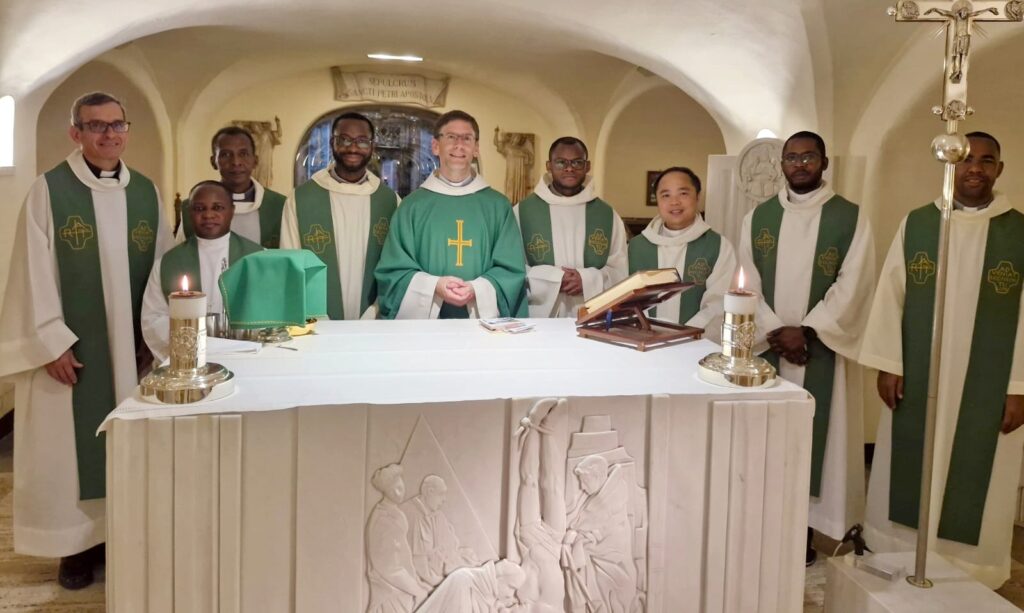
From June 18 to 27, 2025, the congregation’s novice masters met for a session to exchange experience, provide formation and produce a guide to good practice for novice masters.
There were in fact 9 participants on site (current or future novice masters) and 2 online, but they were very assiduous. They were accompanied by Fr. Vincent Leclercq, Fr. Benoît Bigard and many others (Superior General, assistants, Sr. Mary Lembo, Sr. Marie-Pierre (RA)…).
The aim was to address the foundations of Assumptionist religious life in a time of interculturality, revelations of abuse, new mission realities and the arrival of new profiles for novices and novice masters.
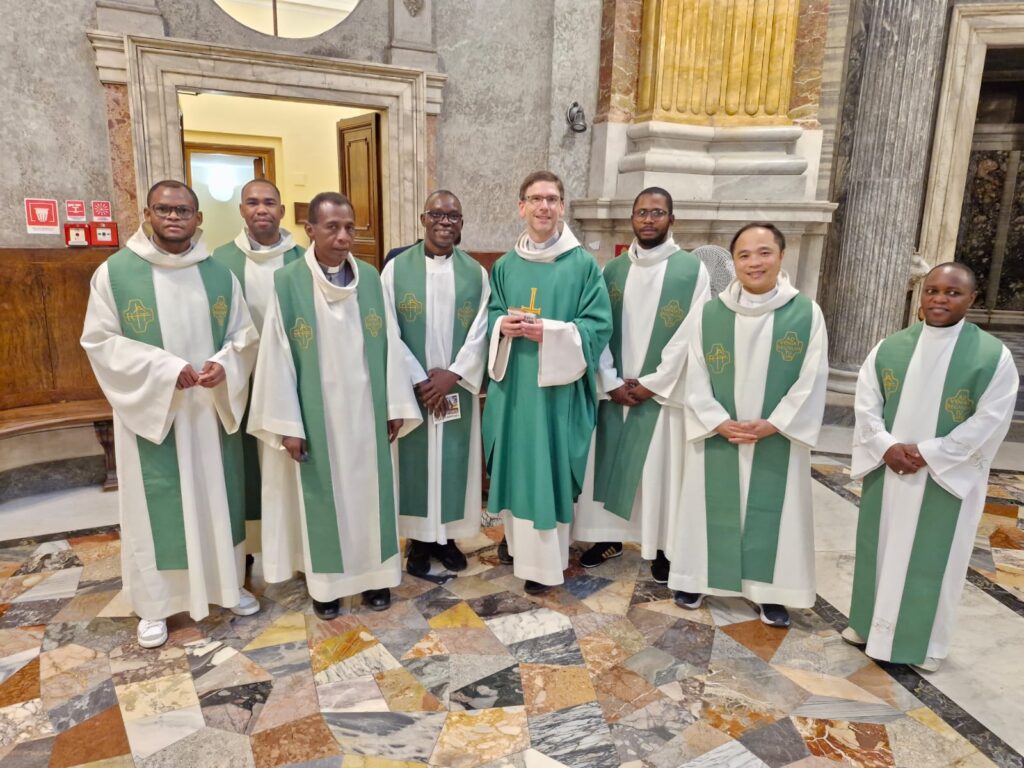
The exchanges highlighted the need to deepen certain themes together, including that of the Assumptionist charism and its transmission. Father Ngoa reminded us of this with a strong challenge:
“be careful not to betray or lose the soul of our Assumptionist tradition”.
He echoed Father Benoit Grière’s welcome to 2018:
” For the novitiate, the Master of Novices is the right-hand man of the Superior General ” (E.S. p. 258) […] the Superior General is the guarantor of the congregation’s charism. It is the Superior General’s priority to ensure that this charism is fully transmitted to the younger generations, and also to contribute to its dynamism among all the brothers of the Institute. The Masters of Novices are primarily responsible for transmitting the charism and our tradition, so that they remain alive and dynamic […]. Emmanuel d’Alzon also said “the Master of Novices must be the living rule of the novitiate ” (E.S. p. 259).
Another key theme is “pedagogy”. More than just information content, the novitiate is the place where a common heritage is appropriated. This heritage comes from Father d’Alzon’s experience, which we need to recontextualize historically, theologically and spiritually so that it can reach today’s young Assumptionists, become inculcated in our churches and nourish our mission.
On charism, at least two leads have emerged:
– the first is to pass on a “historical awareness” of the founder. To recognize that Father d’Alzon could not have known everything we know today: he is a model to be imitated in fidelity and creativity: ” Go and do likewise ” (Lk 10) does not mean reproducing exactly what was done in the past. However, let’s not do the opposite of what d’Alzon would have done. To do so would be to “betray” our tradition…
– the second is the concern to make charism visible through practices. For example, “freedom, punctuality, cleanliness”: these words are simply posted in the classroom… In fact, they are more than words: they are above all (virtuous) practices. And when you see them displayed, it’s highly likely that something of the Assumptionist charisma is already being transmitted.
So many trainers, so many experiences to share, so many contexts, so many teams of trainers, so many difficult or even dramatic situations…
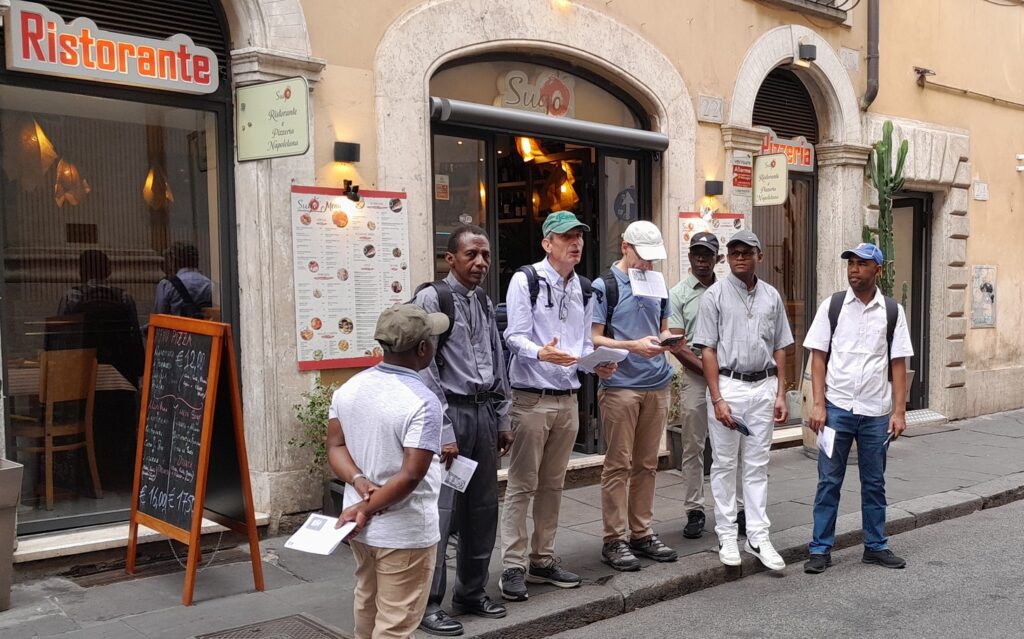
Certain challenges can be found throughout the novitiates:
We have returned to the responsible use of the telephone, even if it means withdrawing access to it for a pre-determined period. With international novitiates, we multiply the ways of doing things, but sometimes also the sources of misunderstanding and conflict.
The novitiate is a call to conversion, as much through the personal example of the novice master as through the community model. This example helps each novice to find his or her place in life. Father Joao, referring to his experience in Brazil, even spoke of a “fundamental option”.
For the novice master, setting an example means being available to the brothers, physically present at the novitiate and faithful to prayer, spiritual accompaniment, the sacrament of reconciliation, punctuality, good humor even when he no longer feels like teaching, good relations with everyone even when he would have preferred more time for himself. He needs God’s help to accomplish his mission.
The novice master needs to work on himself to be able to invite others to work on themselves. This time of introspection prepares him to accompany. If he makes the effort to find his own path in the path of a novice, it becomes easier for him to understand and welcome him as he is, without judgment.
The novice master needs ongoing training. The time he spends preparing his lessons helps him grow in his ability to provide support. In other words, he’s never finished learning, especially from experience in the field. The fear of beginnings quickly gives way as he gradually shifts his focus from his own apprehensions(and himself) to the needs of novices and the concrete answers he can provide. The message from a more experienced novice master to one just starting out in the role could be summed up as follows: “You teach the novices, but they in turn will teach you how to accompany them better”… sometimes painfully, and not without having gone through a few difficulties.
The joys of the novice master are numerous and necessary to help them carry out their mission:
– that of benefiting from the help of outside religious: visits, e-mails, telephone conversations, sharing of animation or teaching materials, exchange of experiences as during this session. Such “joy” would benefit from being organized and more systematic.
– that of seeing young people welcome each other and progressively place Christ at the center of their fraternal relationships, and ultimately of their daily lives.
– that of seeing wishes become inculturated by encouraging the expression of each culture.
The main difficulty is undoubtedly having to repeat the same things for each generation of novices, but sometimes also for the same novitiate; when the number of novices is high (or very variable), this constitutes a challenge for “personalized accompaniment”. Another difficulty is sometimes having to fill in the gaps left by a postulate that is too short or incomplete.
Sometimes it’s painful to realize that a brother was moving forward “masked” – without being frank about his real motivations – and that the lamb of the “novitiate” has finally turned into a “wolf”.
These are just a few echoes of the session, the fruits of which – and in particular the Good Practices guide for novitiate formation – will be shared elsewhere…