


The origins of the Near Eastern Mission
On December 20, 1862, Fr. Victorin Galabert (1830-1885) arrived in Constantinople, taking the first steps in the extraordinary missionary and spiritual adventure of the Augustinians of the Assumption in the East.
On June 3, 1862, leaving an audience with Pius IX, Father Emmanuel d’Alzon was a little taken aback. “ I bless your works in the East and West”, the Pope had just told him. Yet the young congregation he had just founded, the Augustinians of the Assumption, had no apostolate in the East. Barely outside France! Certainly, the Pope’s words have fallen on fertile ground: Christian unity is a passion for Fr. d’Alzon.
“I bless your works of East and West”.
Pius IX to Fr. d’Alzon in 1862
In the preceding years, Father d’Alzon did have plans to set up a Maronite seminary in Lebanon, and then to buy the Cenacle in Jerusalem in order to establish his religious there. But nothing very conclusive. On June 6, the Pope clarified his plans: he intended the Assumptionists for the young Bulgarian Catholic Church, recently united with Rome. From then on, one thing led to another. In September, the General Chapter decided to send religious to the East: the first volunteer, Father Galabert embarked from Marseille at the end of November. By December 20, he was in Constantinople, before settling in Andrinople, at the gateway to Bulgaria.
A large-scale mission
Within a few years, the Assumptionists were to spread throughout Eastern Europe, soon helped by the Oblate Sisters of the Assumption, founded in 1865 for this purpose by Fr. d’Alzon. At first, the main focus was on Bulgaria. In 1863, Fr. Galabert was in Plovdiv, where he founded a school that was to become the Collège Saint-Augustin. Until its confiscation by the Communists in 1948, it was one of the most prestigious schools in the Balkans. From 1882, the Assumptionists were also in Jerusalem, where they built a vast Notre Dame de France hostel for the pilgrims they took to the Holy Land, financed by readers of Le Pèlerin.
In 1912, 125 Assumptionists and 160 Oblates were working in the Near Eastern Mission, and in 1929, in Turkey alone, we had 15 AA communities!
Father d’Alzon’s real objective is Russia. In his own words, it’s all about “putting an end to the schism”. And the road to Moscow, the “Third Rome”, passed first through Constantinople and Turkey, which was to become the intellectual center of the Near Eastern Mission with the Institute of Byzantine Studies, founded in 1895 and transferred to Bucharest in 1937 (before being repatriated to Paris). This was a decisive contribution to the Church’s rediscovery of the Eastern heritage, even if the objective of these religious was for a long time to return the Orthodox to the Catholic fold. It wasn’ t until Vatican II that the Near Eastern Mission took a resolutely ecumenical turn. In the meantime, wars and the Soviet glacis had taken their toll.
The Assumptionists’ Near Eastern Mission has been deployed in Turkey, Bulgaria, Israel, Lebanon, Greece, Romania, Yugoslavia, Ukraine, Lithuania and Russia.

The First World War, followed by the Greco-Turkish War (1919-1922), wiped out the Assumptionist communities in Turkey. The religious redeployed to other countries, such as Romania (1923). In Russia in the 1920s, Mgr Pie Neveu, an Assumptionist secretly ordained bishop, became the only Catholic bishop in Russia, before being banned in 1936. After the Second World War, the Iron Curtain came down on religious and their works: foreign Assumptionists were expelled, natives imprisoned or even executed, like the three Bulgarian martyrs Pavel, Kamen and Josaphat, shot in 1952 and beatified in 2002 by John Paul II.
It was not until the fall of communism in 1989 that the few surviving Assumptionists emerged from the shadows and others returned to the East.
the Near Eastern Mission today
The 34th General Chapter (2023) reminds us of the relevance of this mission :
“The Near Eastern Mission is an important mission for the Catholic Church. As such, it must be preserved and strengthened. Pope Francis reminded us of this importance in his audience with our General Chapter:
” I encourage you to continue this mission in the Middle East where the situation of Christians is threatened, and in Eastern Europe where the war in Ukraine is jeopardizing the civil and religious balance of the region. I also want to express to you the gratitude of the Holy See for the fidelity of your commitment to the small Catholic Church of the Byzantine rite in Bulgaria, which is counting on you.” (GC n°39)
“The communities of the Near Eastern Mission have become important centers of internationality and interculturality. In the East, they welcome Assumptionist religious from Africa and Asia as well as from Europe.” (CG n°38)
“Several communities of the Near Eastern Mission are located in cities of historical and symbolic importance: Moscow, Istanbul, Jerusalem, Athens… These cities are strategic locations where the world’s geopolitical balance will be played out in the coming years.” (CG n°37)
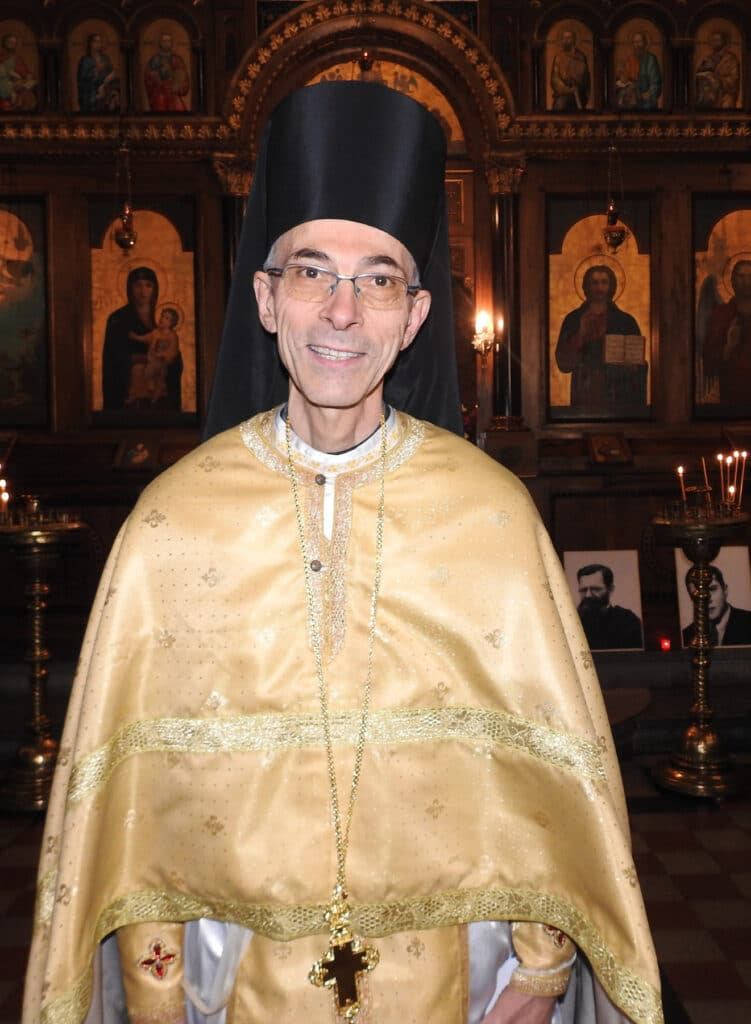
“Ecumenical and interreligious dialogue, pastoral care for migrants, welcoming pilgrims – these are just some of the current realities of the Church, however modest, to which our Near Eastern Mission contributes.” (GC n°41)
Our Near Eastern Mission today also includes: the St Pierre St André Center in Bucharest (Romania), dedicated to ecumenism, one of our mobilizing works; parish services (Moscow, Istambul, Athens, Plovdiv); student ministry (Romania)…

Other ecumenical commitments
While dialogue with Eastern Christian churches is central to the Assumptionists , their ecumenical commitment to the churches of the Reformation should not be overlooked either.
Coming from the Cévennes region, strongly marked by the wars of religion of previous centuries, Fr. d’Alzon remained passionate throughout his life about Church unity. As with Orthodoxy, this meant – in the vision of the 19th century – “bringing back lost Christians” to Catholicism. To work for the “conversion of Protestants”, no longer with weapons, but through the power of charity and careful, vigorous preaching.
“The Protestants of Nîmes, who loved strong convictions, couldn’t help but feel a certain sympathy for him. They felt they were in the presence of a loyal adversary, who did not seek to deceive them with ambiguous words. His frankness was the original mark of his character.”
S. Vailhé, Vie du P. Emmanuel d’Alzon.
During his Roman years (1833-1835), Emmanuel d’Alzon, through an English seminarian friend Charles MacCarthy and the future Cardinal Wiseman, was also introduced early on to the ideas of the “Tractarians” (members of the Oxford movement) and their desire to recover the Catholic roots of Anglicanism. He later wrote several articles presenting the Oxford movement as a sign of hope for the return of Anglicans to Catholicism. In January 1854, he received in Nîmes John Hungerford Pollen, an architect and former Anglican clergyman who had converted to Catholicism under the influence of this movement.
It is therefore natural that, with the Second Vatican Council, several Assumptionists resolutely committed themselves to ecumenical dialogue with the Churches of the Reformation, thus covering the diversity of Christian Churches, East and West. A number of outstanding Assumptionist figures stand out in this respect:
- P. Georges Tavard, a.a. (1922-2007) : A leading theologian in the United States, he was an expert at the Second Vatican Council and one of the pioneers of Catholic-Lutheran and Catholic-Methodist dialogue. His theological work is a benchmark for Christian unity.
- P. Daniel Olivier, a.a. (1927-2005): A recognized specialist on Martin Luther, he worked for the theological rehabilitation of the reformer by the Catholic Church. His seminal work, Le Procès Luther, aimed to correct historical misunderstandings. He has collaborated with numerous Protestant theologians to deepen Lutheran thought.
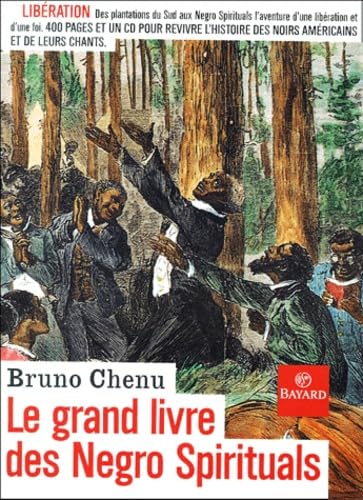
- P. Bruno Chenu (1942-2003): Former editor-in-chief of La Croix newspaper, he was a key figure in French ecumenism as a faithful member, and even co-chair, of the Groupe des Dombes, a joint Catholic-Protestant theological think-tank. His work on the World Council of Churches (WCC ) and on the “Black Churches ” is widely recognized.
Today, many Assumptionists are still involved in this dialogue, whether in theological, pastoral, spiritual or fraternal fields, and young brothers are also specializing in ecumenism.
…and interreligious dialogue!
As is the case for the Catholic Church as a whole, interreligious dialogue is more recent in our congregation, and takes several forms:
Intellectual: Some brothers specialize in Islamology, Eastern religions, theology of religions and teaching in these fields.
Pastoral: Interreligious dialogue is lived out in very concrete ways, by offering young people – or the not-so-young – from different religions the opportunity to discover each other, to learn from each other, to act together: Interfaith brotherhood events (Togo); Multidenominational choir competitions (West Africa); Integration trips (West Africa); Catholic schools open to young people of different religions; Interfaith and interdenominational youth networks (RJIA, YOUNIB); “Festival of the Religions of The Book” (Quebec)…
Fraternal and informal: Especially in regions with a non-Christian majority (Turkey, Israel, Burkina-Faso, Togo, Vietnam…) through the sharing of daily life…
