


Formation to Assumptionist religious life takes time… Usually about ten years!
First contacts
Many paths have been taken; just ask today’s young religious. The preferred way is to meet an Assumptionist religious. There is no shortage of opportunities: parishes, chaplaincies, pilgrimages, or even more specifically: one or two years spent in one of our student hostels, in one of our host communities, in an international voluntary service. Links can be forged in other ways: via the Internet, through our media, through reading…
The process takes place in several well-structured stages. However, the paths are adapted to each individual’s situation. In the first stage, the young candidate becomes a ” candidate”, often spending time living in an Assumptionist community, generally while continuing his or her studies or work. During this flexible period, candidates may express the wish to discover the congregation in greater depth. This is called “postulancy”.
The postulate
A time to discern motivations
This time is “centered on the discernment of the motivations and attitudes that are at the origin of the desire for religious life”. The young person lives in a designated community, may be continuing his or her studies or professional work, or, depending on the country, may already be following a specific year of formation. The aim is to deepen self-knowledge, to verify “the solidity of one’s desire to follow Christ, but also to verify one’s aptitude for community life and one’s desire for apostolic life”.
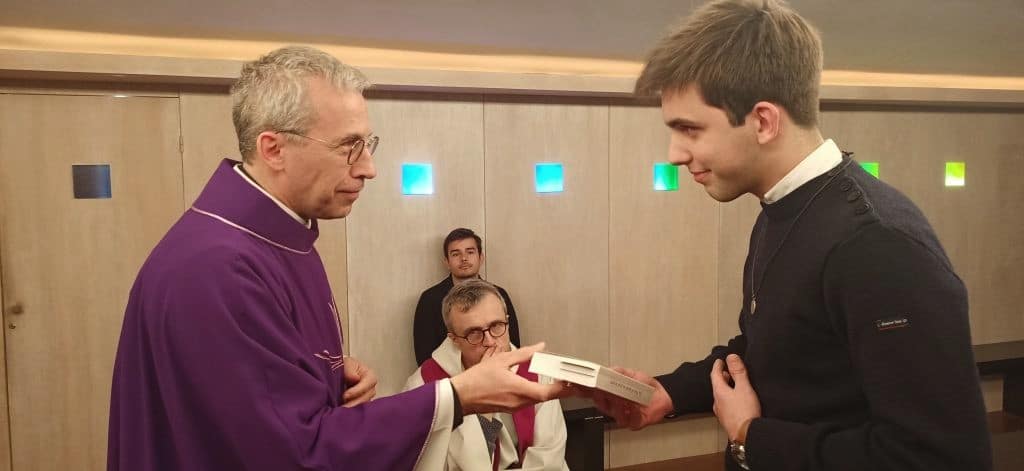
The length of this period may vary from one candidate to another, depending on circumstances and the maturity of his or her path, but is generally 1 or 2 years.
The novitiate
A year of specific training for religious life
The minimum duration of the novitiate – one year – is set by canon law. It is a time of spiritual experience, discernment of vocation, confirmation of the call received, but also of knowledge of the founder, the history of the congregation, religious life over the centuries, its spirituality, its charism, its sources, Saint Augustine, the rule of life, the great texts of the Magisterium, with daily practice of the liturgical prayer of the Church. At this stage, regular and loyal dialogue with the novice master is fundamental and indispensable. At the end of this process, the novice may ask to be admitted to first profession.

The congregation accompanies 40 to 50 novices each year in 8 novitiates: Saint-Lambert-des Bois (FR); Ba Ria (VN); Sokodé (TG); Butembo (RDC); Arusha (TZ); Pinhal (BR); Tuléar (MD); Manille (PH).
Theological studies
The post-noviciate studies usually takes place at a Catholic university or seminary. The young religious lives in community and takes part in community life and decisions. They renew their vows every year (3 years minimum, 6 years maximum), until they take their final vows.
The post-novitiate years are not limited to academic formation. It’s a time to put down roots, a time to learn fidelity, endurance and patience. It’s also a time for deepening the spirit and vocation of the apostolic community, and a time of preparation for future mission.

In concrete terms, this period is generally marked by a demanding philosophical and theological training; some are called upon to continue their studies right up to doctorate level.
At the end of temporary vows
With the agreement of his formators, the religious writes an application and a lengthy personal assessment, a text of thanksgiving for all that has been experienced, without evading the questions that remain. The religious with whom he has spent his formative years also give their opinion. The young religious may then be called upon by the Superior General of the Congregation to pronounce his final vows:
“In the presence of my brothers, in your hands, Father…(representing the) Superior General, for the love of Christ and to extend his Kingdom, I, brother N… promise to God to live in poverty, chastity and religious obedience until death, according to the Rule of Saint Augustine and the Assumptionist Rule of Life”.

And the priesthood?
As Assumptionists, we are first and foremost religious, and we can live our vocation as religious brothers all our lives without turning to ordained ministry. Religious brothers can be teachers, educators, journalists, engineers, treasurer, involved in social works, caregivers, workers…
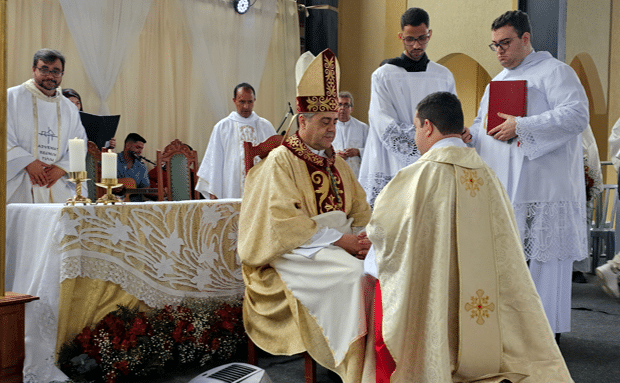
In addition, for the service of the Church and the good of the congregation, young Assumptionists are often asked to prepare themselves, if they so wish, to receive ordained ministries. After perpetual profession, a candidate for the priesthood may request ordination to the diaconate and the presbyterate. A deacon’s year enables him to take his first steps in ordained service and ministry.
Ongoing formation
Clearly, formation doesn’t stop here. Religious must cultivate their minds, hearts and intellects throughout their lives. Notably through a number of sessions offered throughout religious life…
-

Session of African brothers in Europe -

Session on the Oriental Mission – in Bulgaria -
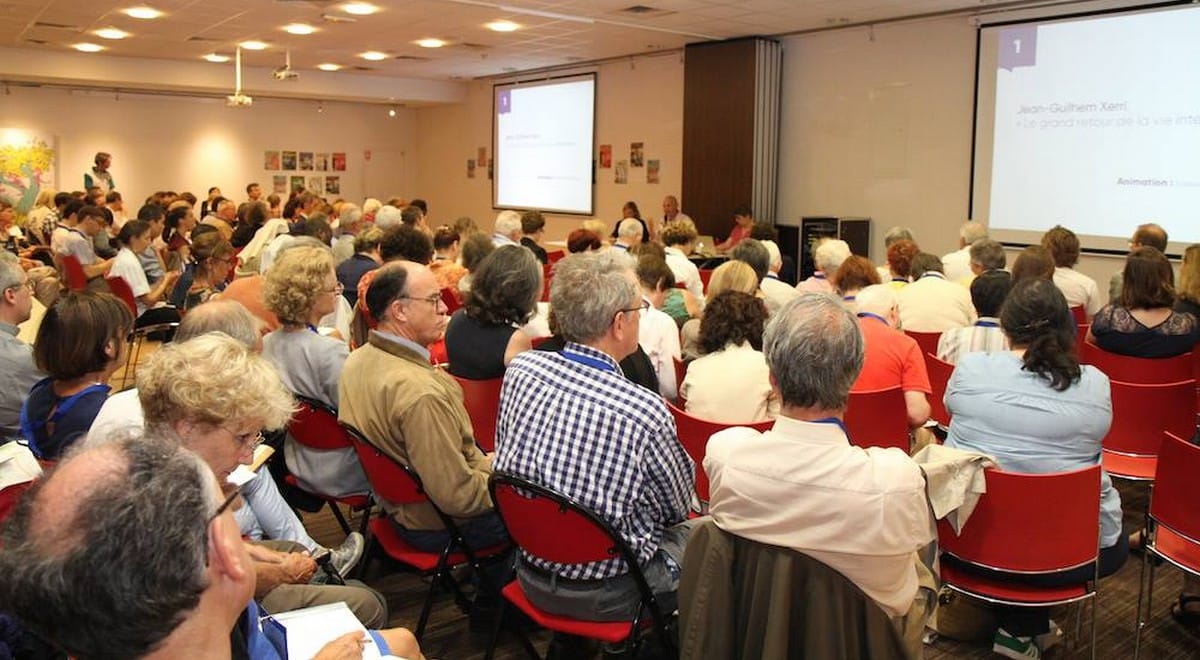
Assumptionist European University -

Trainers’ session in Nimes -

In the footsteps of P. D’Alzon at Le Vigan -

Religious Brothers’ session in Rome (at the Dicastery of Consecrated Life)
Today, the congregation form over 400 young religious in 33 countries… From postulancy to the first years of priesthood…
For us, formation is an essential mission in a world that needs men and women of dialogue. And that means quality training: human, spiritual, intellectual and pastoral.