


Testimony of P. Sylvain Gasser
Assumptionist, journalist and musicologist
If, for Christians, every person has a vocation, we must recognize that this term is often reserved for a very specific status, that of the presbyteral ministry or the consecrated life. Isn’t this too simplistic, or even frustrating?
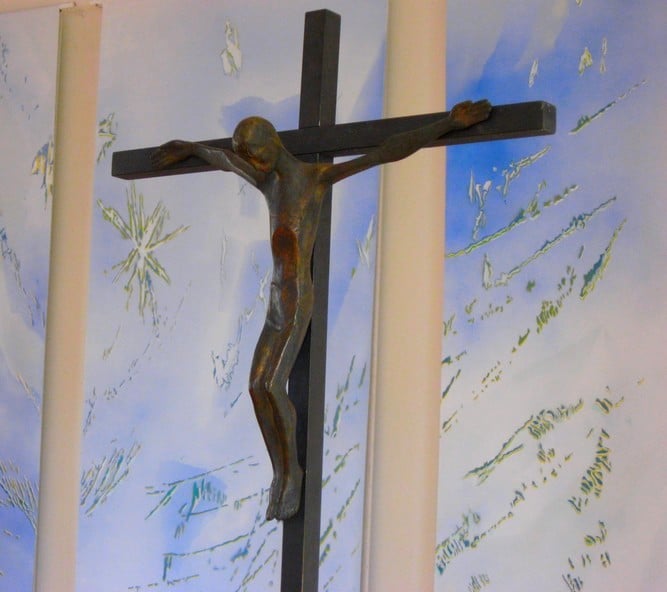
“On the day of my ordination, many people shared their joy with me. Some of their reactions left me wondering: “How lucky you are: at least God has called you!”, “It’s great to have a vocation, to be directly connected to God! I confess I’ve never felt God’s call in this way. Even less have I ever felt God’s privileged partner in the grace of becoming a religious and a priest.
“I am, here I am” is God’s high name, the one he delivered to Moses on Mount Horeb (Exodus 3:14), an untranslatable divine call that nonetheless awaits a human response.
In the Bible, God calls man in many ways. A call to life, a call to grow in the eyes of love, a call to leave the comfort of our secure structures, a call to broaden our horizons, a call to speak out loud and clear, sometimes against all odds.
These calls demand attention and vigilance, patience and listening. Man attempts a response, with fear and awkwardness, but that’s how he builds himself. To each his own experience, and his own way of overcoming the derision of words in order to express it. ” Here I am “, was the confident response of those called by God in the Bible. Today’s men, women and young people respond, as if in echo, “Me too”. Isn’t man’s identity woven from the succession of “ Here I am ” responses that we, in turn, make, like so many presences to the call? This, I believe, is the greatness of the Christian faith: to discover oneself called by God to follow Christ, and to participate in the great gathering of the called that is the Church.
But how can I be sure that it’s God who’s calling, that I’m not continuing my soliloquy, lulling myself into the delicious illusion that delights me? The question must be asked, and discernment required. Jesus, who never ceased to sharpen his disciples’ listening skills, also invited them to pay attention to the content and form of this listening: ” Be careful what you hear ” (Mark 4:24), “Be careful how you hear ” (Luke 8:18). Because listening involves a person’s commitment, it’s a good idea to devote our full attention to it, to summon our reason so that it understands the words of the person we can’t speak to.

Answering the call often means bringing out what’s already there, present within us, and just waiting to blossom.
Those who one day committed themselves to helping prisoners, the terminally ill, illiterate children, drifting teenagers, who went to the other side of the world to help their fellow human beings, victims of misery, war and famine, those who decided to realize their full potential as men and women by choosing a life dedicated to the All Other, to the other, to all others, made manifest a voice that preceded them and came from farther away than they. These disciples of the new times have in turn aroused audiences, through the witness of their lives, a call heard, good news spread.”
P. Sylvain Gasser
(1) From 100 raisons de vivre en chrétien, p. 125, Sylvain Gasser, Bayard Éditions, 2017