The Congregation is organizing an international formation session from November 2 to 12, 2026, in Ouagadougou, Burkina Faso. This gathering brings together religious who are involved in the accompaniment and formation of candidates for religious life, particularly within the Congregation’s international formation communities and major formation communities.
A special time for sharing experiences, reflecting, and renewing our commitment to Assumptionist formation.
November 2, 2026: An inaugural day dedicated to brotherhood
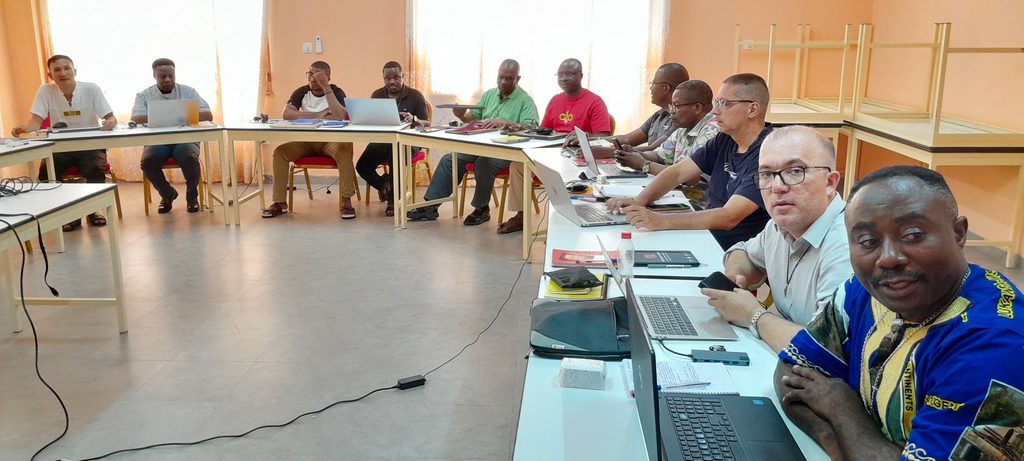
The first day began with a Eucharistic celebration presided over by Father Miguel DIAZ, Secretary General for Formation (SGF). This celebration allowed the participants to entrust the session to the Lord and to place their work under the guidance of the Holy Spirit. After this time of prayer, the 17 participants were invited to introduce themselves individually in order to get to know one another better and foster a climate of trust. This simple yet essential introduction aims to build a genuine experience of fraternal life among the formators, who come from diverse backgrounds. Beyond a simple personal introduction, this moment allowed each person to share part of their personal, religious, and missionary journey. It created a space for encounter and mutual enrichment centered on experiences in the areas of formation, academic life, and the apostolate. The participants thus expressed their desire to benefit from the experiences of others, to discover new practices, and to deepen their understanding of the challenges facing formation communities today.
Being a formator is a responsibility and a true calling
The session was graced by the presence of Father Benoît Bigard, Assistant General, as well as Fathers Miguel Diaz and Marcelo Marciel, former Assistant Generals. The presentations and discussions highlighted, in particular, the special responsibility entrusted to formators. This responsibility has a thematic dimension, related to the areas of formation for which each is responsible, but also a geographical dimension, linked to the realities of the various Provinces, Vice-Provinces, and Vicariates. Being a formator in the Assumptionist Congregation, therefore, is not merely a matter of imparting knowledge or delivering a formation program. It is, above all, a response to a vocation and an acceptance of a mission in the service of the human, spiritual, communal, intellectual, and apostolic growth of those being accompanied. From this perspective, the formator is called to be present wherever the Congregation needs him, taking into account the cultural, social, and ecclesial realities of each context.
“To form” and “to support”—two verbs that convey subtle differences…
Religious formation aims to help each person develop the abilities necessary to discern, embrace, and fully live out their life choice. The formator fosters inner freedom, human maturity, spiritual growth, and the ability to make a lasting commitment to the chosen vocation. It is not a matter of deciding for the candidate, but of helping them discern, providing them with the necessary means to move forward, and accompanying them through the various stages of their journey. The formator is thus a guide who illuminates the path, supports efforts, encourages progress, and helps each person recognize the demands and riches of their vocation. This mission requires serious preparation, inner openness, a willingness to listen, and a constant capacity to learn. The participation of seven new formators in this session is an encouraging sign for the future of Assumptionist formation. Their presence demonstrates a commitment to preparing individuals capable of undertaking this mission with competence, discernment, and fidelity to the Congregation’s charism.
A session to address current challenges in education
Scheduled to last eleven days, the session will address several fundamental issues for the future of Assumptionist formation. The program includes social and ecclesial realities, the situation of formation communities, the guidelines of the General Chapter, and the current challenges facing religious life. Participants are invited to reflect on the Assumptionist mission, leadership, shared responsibility in the pooling of resources, communication between formation teams and provincial leaders, as well as pastoral preparation and ordained ministries. Particular attention is given to the challenges of digital technology and artificial intelligence, specialized formation, interculturality, internationality, and issues of justice, peace, and integrity of creation (JPIC). Group work, exchanges of experiences, visits to formation institutions, and opportunities for fellowship complement the lectures and shared reflections.
An experience of communion in the service of the mission
Despite a packed schedule and busy days, this first day unfolded in a fraternal and constructive atmosphere. It allowed participants to recognize the richness of their respective experiences and the importance of working together to improve the quality of formation in the Congregation. The Ouagadougou session thus serves as an opportunity to renew practices, strengthen ties among formation communities, and prepare formators to better meet the expectations of the Church and the needs of the Congregation.
We also had the opportunity to learn about the Vicariate of West Africa (AO), its organization, its realities, and its commitments to the Assumptionist mission. This experience allowed us to better understand the local context in which our brothers live and work, as well as the challenges they face in the areas of formation, community life, and the apostolate. This time of exchange was particularly enriching, as it helped us deepen our mutual understanding and strengthen our sense of belonging to the same religious family, united by the charism of Father Emmanuel d’Alzon and by the mission to bring about the Kingdom of God.
Alphonse Randriamizaka aa