

Challenges and Key Considerations During the Formation Process
As scheduled, the day begins at the Master’s feet with morning prayer at 6:45 a.m., followed by Mass. At 9:00 a.m., after breakfast, we gather in the hall to continue our session. This day is devoted specifically to the challenges—or rather, the areas of focus—on which the formator will need to guide our brothers. These areas of focus are addressed in four sessions throughout the day.
The first part consists of a presentation by Father Benoit, Vicar General, on the discussions held in the General Council regarding current issues in formation. Summarized in 14 points, these points reflect convictions that have emerged from canonical visits and the analysis of various cases.
- The Importance of Being a Formator
- Formation in the Fundamentals of Religious Life
- Fostering a Holistic Education
- New avenues for formation in the Assumptionist charism in terms of the “Assumptionist heritage,” which consists of more than just written sources. Charism as a spiritual, intellectual, and historical heritage; a way of thinking; an apostolic tradition; apostolic works that have shaped our history; figures from our heritage; and recent apostolic works and projects
- Apostolic Formation from the Earliest Years of Formation
- Rethinking Strategies to Shorten the Path to Specialized Degrees
- Formation at La Maison Sûre.
- The Challenge of Digital Technology in Education: Possible Solutions
- Formation g from adult to adult, formation in synodality.
- The Importance of the Formators’s Follow-Up on Academic formation
- Formation on the sharing of these resources
- Promote practical formation programs that are not necessarily academic
- Formation on the relationship between the secular and religious spheres, which is not optional
- Points to Keep in Mind During the Presentation of Candidates for Perpetual Vows and Ordination
This session concludes with a series of comments and suggestions for addressing these issues.
In the second part, Fathers Louis-Martin and Sébastien reflect on the session on the missionary spirit held in Arusha in June 2028, during which it was reaffirmed that our Congregation is missionary, apostolic, international, intercultural, and synodal. Therefore, it is the formator’s duty, on the one hand, to instill in the young men this spirit and missionary vocation of the Congregation from the very first years of their formation and, on the other hand, to form them to develop a missionary spirit marked by Assumptionist qualities and virtues. This session concluded with a group discussion during which the formators exchanged views on the reasons that can give rise to fears and resistance to the mission: fear of the unknown, preconceived notions, age, the fear of leaving one’s comfort zone, negative experiences the missionary may have had, a lack of preparation on the part of both the host community and the future missionary, and the social unconscious inherited from the spirit of colonization—to name just a few.
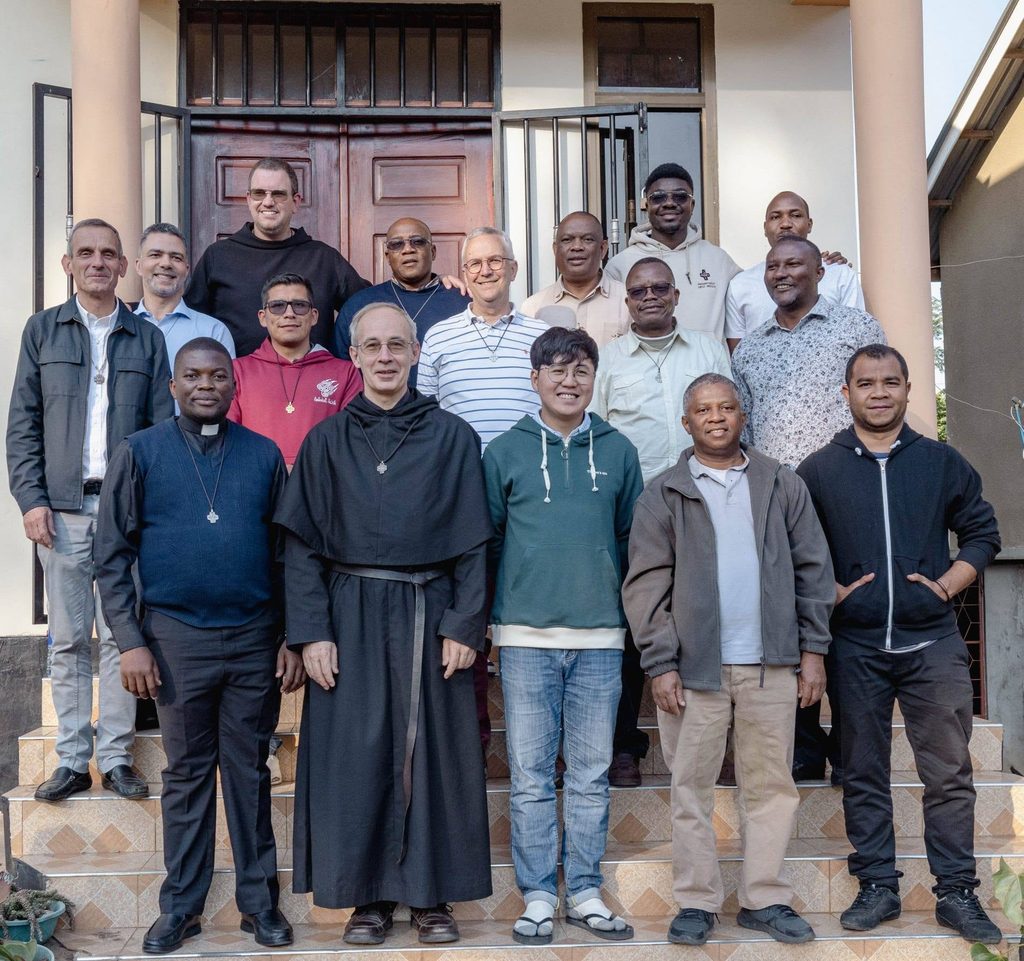
The third part of the day focuses on the need for and methods of leadership formation, in light of the accumulation of responsibilities observed in our communities, the recurring calls to exercise leadership, and the shortage of leaders in various areas of our lives. The formators note that our Assumptionist religious life, as lived in our formation communities, already serves as a school for leadership formation.
- Promote initiatives to help young people discover their leadership potential;
- Entrust young people with responsibilities related to leading activities (such as serving as a “socius”) and community life (such as serving as treasurer, work coordinator, etc.) from the very beginning of their formation;
- Encourage the brothers to serve on the local house council;
- Trust young people by entrusting them with responsibilities in apostolic fields such as vocational ministry and youth group leadership;
- To form young people to take on responsibilities where they study or carry out their apostolate;
- Involve young people in formation in the Province’s committees alongside their elders;
- Encourage the brothers to use their own imagination and work together to find solutions to the challenges facing the community;
- Seeing formators take responsibility as a team
- Teach the brothers to manage with transparency, to be accountable, and to evaluate—all in order to highlight synodality and the virtues championed by our congregation: frankness, boldness, and selflessness;
These are indeed concrete ways to form our young people to become the future leaders of ART.
The fourth session focuses on formation in synodality and synodal formation, in light of the revision of the *Ratio fundamentalis Institutionis sacerdotalis* proposed by Post-Synodal Group No. 4, from a synodal and missionary perspective.
In his presentation, Father Miguel notes that this review simply serves to remind us of the key points of our charism and our Rule of Life, which is permeated from beginning to end by the spirit and call to live and work in synodality. At the end of his presentation, two questions guide our group reflection to determine whether formation in the Assumption is synodal and helps the brother to be a synodal missionary:
- Are we providing formation in synodality? Are our brothers developing synodal attitudes and skills?
- Is our formation, in and of itself, synodal, or is it called to become more so? And how?
In the feedback, participants unanimously agree that our formation helps young people develop synodal attitudes. This is achieved through participation in key moments in the life of the community: the local chapter, the local council, and shared activities (such as doing the dishes, eating meals together, recess, etc.). In addition, two other areas specific to the Assumption help our young people develop this “synodal spirit”: the Alliance with the laity and Inter-Assumption. To these areas, let us also add a practice unique to the Assumption: the participation of the laypeople with whom the brother works (the cook, the sentinel, the catechist) in evaluating the brother for his call to profession or ordination. Finally, in the apostolate, synodal formation involves the humility to learn first from the People of God, to make their history and practices our own, before proposing new paths to them.
Beginning at the feet of the Master who sends us forth, the day concluded in the same place with Vespers.